
Muddy pawprints: Life in a Multi-Species Home Can be Messy!
Muddy pawprints: Life in a Multi-Species Home Can be Messy!
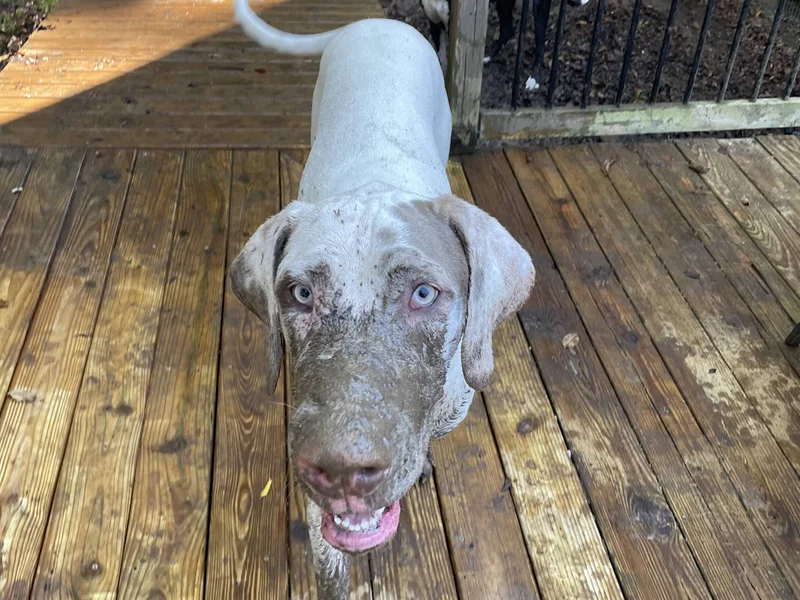
Have you ever considered the complexity of living in a multi-species home? Think about it for a moment. How many different species live within your home? What does that mean in everyday life? How can we balance the needs of each species to make life enjoyable for all?
How we and our companion pets move through life is unique to each of us as individuals and, more broadly, as individual species. Mix in our personal life experiences and abilities, then drop us into a confined space (house, apartment, or condo), and what do we have? Hopes, dreams, assumptions, conflict, and questions.
“Why do they do the things they do?” wonders the dog about the cat and the humans.
“Why do they do the things they do?” wonders the cat about the dog and the humans.
“Why do they do the things they do?” wonder the humans about the dog and the cat.
We can spend years living together, missing out on joy and humor, simply because we don't ask why. We may not know how to consider the other species in our homes from their point of view. We may not realize that our lives with our non-human companions can be improved when we consider the “why.”
Why do they do that?
Living with others can create conflict, whether in a single-species or multi-species home. I want to paint the walls gray, but my partner wants to paint them tan. Solution? We negotiate. Or not. Maybe when he goes out of town, I’ll paint the walls. Skip the negotiation and seize the opportunity. There may be some grumbling when he returns, but it’s minor, and I love the new color of the walls. It was all worth it. Right?
In a multi-species home, even a seemingly minor conflict is complex. My partner brings bagels home on Saturday morning. I’m thrilled. Nothing like a fresh bagel from the local bagel shop on a lazy Saturday morning. My partner puts the bag of bagels on the counter, forgetting that the drooling dog sitting in the kitchen is also thrilled that the bagels have arrived and is waiting for her opportunity.
And then, as predicted by the dog, it happens. The bagels are left unattended right there on the counter. Opportunity knocked, and the dog answered happily. The thing is, as a majestic Great Dane, she can help herself to the bagels, leaving the bag right where it was.
I pass the dog on my way to the kitchen, not realizing that she just had a snack. I find an empty bag and the tell-tale sign of unauthorized dog activity (drool on the empty bagle bag). I’m now mad at my partner (“You know better than to leave food on the counter!”). My partner gets defensive (“You should train your dog!”). The dog goes into hiding, trying to get far away from the squabbling humans.
This is life. This is what we are helping our clients maneuver. It’s more than training the dog. It’s about negotiating day-to-day life, being fully human, and living with other species who are fully what they are (canine in this example). Teaching a down/stay will never remove the dog’s opportunistic hard wiring.
Maybe teaching the human to secure food and remove an opportunity from the dog is unrealistic. What's the solution? There are many options. What works in my home may not work in your home. So, we find a solution that fits your needs. This is the core of what we do at Learning Dog - we listen to you, your dog, and your needs. Then we develop a plan that sets your dog up for success in your family.
Need help with your unruly canine companion? We are here to help! It starts with a 15-minute phone consult. Click on the Services tab to schedule your consult.
